Guide · Consumer units
Fuse boards.The cheapest safety upgrade most houses can have.
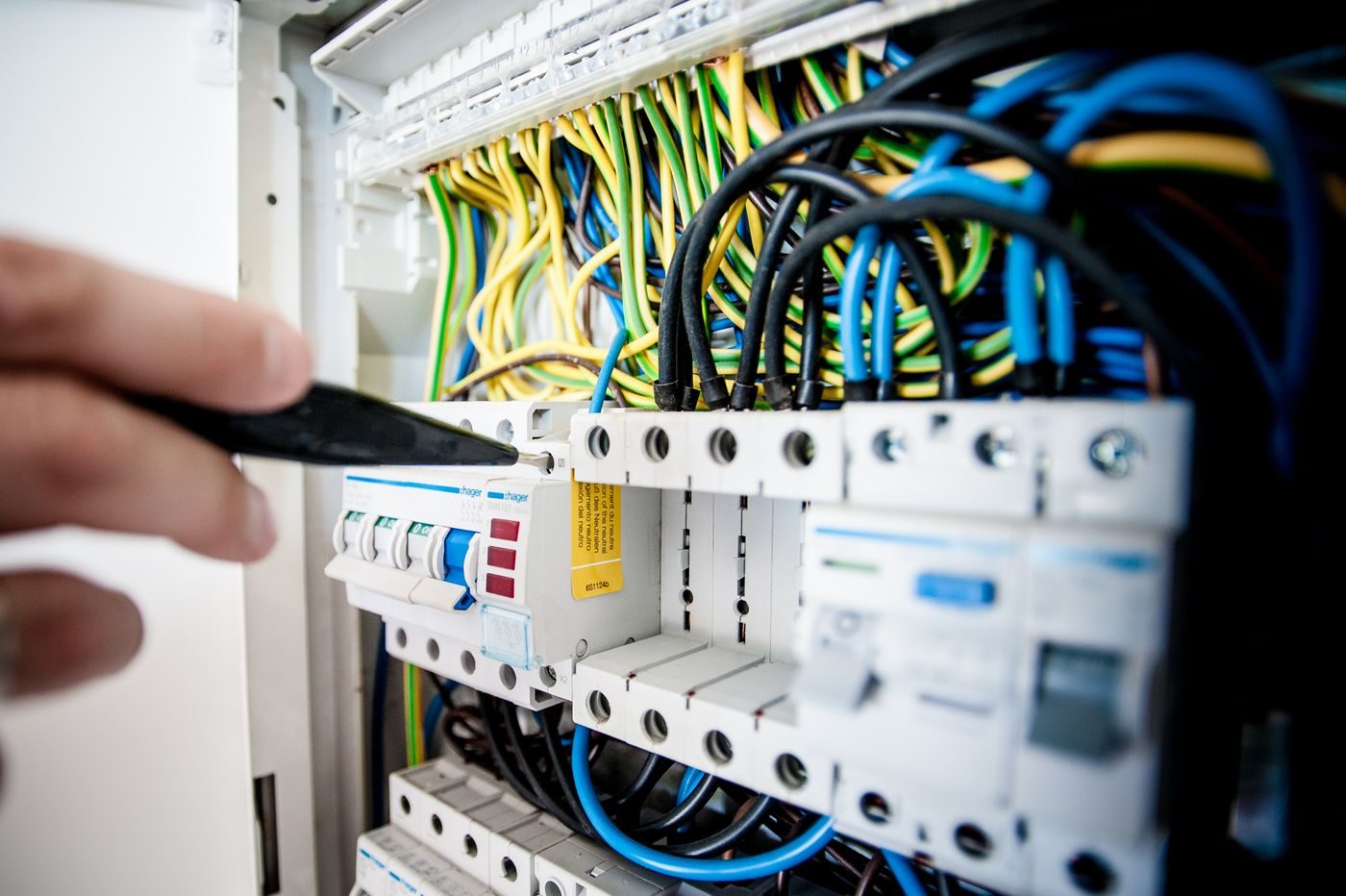
A consumer unit — most people still call it the fuse board — is the one bit of your electrical installation that decides whether a fault becomes a nuisance or a fire. It is also the single most cost-effective safety upgrade in most older houses. Fuse board upgrades and repairs are on Steve's list of jobs, and here's what the work actually involves.
Five signs yours is due
A rewireable fuse box
Ceramic or bakelite carriers with fuse wire in them, or cartridge fuses. No RCD protection at all, which means no automatic protection against an electric shock from a faulty appliance or a cable nicked by a picture hook.
A single RCD covering everything
Common in boards fitted between roughly 1990 and 2015. It protects you, but one fault anywhere takes out the whole house — including the freezer and the boiler — and it's a nightmare to diagnose. Modern boards use individual RCBOs so only the offending circuit goes off.
A plastic board under the stairs
Since 2016 consumer units in domestic premises have generally been required to have a non-combustible enclosure — steel, in practice — or be installed inside one. Older plastic boards are not automatically dangerous, but they are the reason the rule changed.
Signs of heat or age
Scorch marks, a smell of hot bakelite, a board that buzzes or hums, breakers that need a firm push to stay in, or ways that have been added so often the labelling has given up. Any of these is worth a look sooner rather than later.
You're adding load
An induction hob, an electric shower, a hot tub, an outbuilding, or a car charger. Each wants its own way, and a full board with no spare capacity is the point at which "add a circuit" becomes "replace the board".
What actually happens on the day
Look at it first, not just the board
Half the job is what's around the board: the earthing arrangement, the main protective bonding to the gas and water services, the condition of the incoming supply and the meter tails. Steve checks those before pricing, because a board swap on top of missing bonding is a new board doing half a job.
Test the existing circuits
Every circuit gets tested before it's transferred over. This matters: a new RCBO board is far more sensitive than what came before, and a circuit with a slow water leak or a long-standing insulation fault will trip immediately on the new board. Better to find that on a test sheet than at ten o'clock that night.
Power off, swap, and transfer
Supply isolated, old board off, new steel enclosure fitted with its main switch, SPD where appropriate, and individual RCBOs per circuit. Circuits are transferred one by one and identified as they go so that the labelling is real rather than guessed. Expect most of a day with the power off for a typical house.
Test, label, certificate
The installation is tested again with the new board in, every way is labelled legibly, and you get the certificate for the work. A consumer unit change is notifiable work under Part P — Steve states on his own site that he is NAPIT-approved and Part P registered, so ask him for his current registration and he'll send it over before you book.
The questions everyone asks
- How long is the power off for?
- For a straightforward house, most of a working day. Steve will tell you the likely window when he quotes so you can plan around the router, the freezer and anyone working from home.
- Will a new board find problems I didn't know about?
- Sometimes, yes — and that's a feature rather than a fault. An RCBO board is sensitive enough to reveal a circuit that's been quietly leaking for years. Testing the circuits before the transfer is how you find that out on a test sheet rather than in the dark.
- Do I need a full re-wire instead?
- Usually not. A board upgrade on sound cabling is a very different job and cost to a whole-house re-wire. If the cabling genuinely has had its day — rubber or fabric sheathing, no earth to the lighting — Steve will say so rather than putting a shiny board on the end of it.
- Do I get paperwork?
- Yes. Notifiable work is certificated on completion, and the board is labelled so the next person who opens the cupboard can see which way is which.
Have a look at yours
If you want to know whether your board needs replacing or just tidying, ring 07807 704664 or email info@eddoweselectrical.com. Quotes and advice are free, and if the honest answer is that it's fine, that's what you'll be told.